Never pay another late fee for a date nobody saw coming
A missed GST or TDS date costs a late fee, interest, a difficult conversation and — eventually — a client. It is never because the firm did not know the date. It is because the date lived in the wrong place. ERPCA puts every statutory date for every client in one system that creates the work, assigns it, and escalates before it is late.
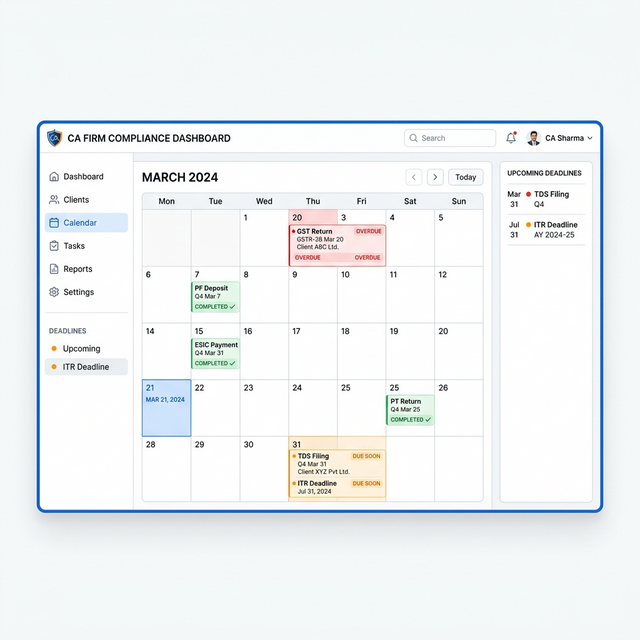
Sounds familiar?
- Dates are tracked in Excel, WhatsApp groups and memory — three sources that never agree.
- Work is assigned verbally, so "I thought someone else was doing it" happens every quarter.
- Nobody sees a deadline is at risk until the day it is due.
- Clients are blamed for late data, but nobody asked them early enough.
On the growth journey
Firms like this are usually at the 🗂️ Control stage — from chaos to control. Read the playbook.
How ERPCA fixes it
Every date, created automatically
Recurring statutory work is generated each period for every client — GST, TDS, advance tax, ITR, audit, ROC — with an owner and a due date, without anyone typing it in.
Task management →Escalation before it is late
Reminders go to the owner first and to a partner when a task is at risk, with a dashboard of everything due in the next seven days.
Operational platform →Client data asked for early
Scheduled WhatsApp and email reminders request documents ahead of the date; the portal shows clients what is pending.
Document follow-ups →Proof for every filing
Acknowledgements, ARNs and documents are stored against the task — evidence when a client or an officer asks.
Client management →What this looks like on a normal Tuesday
One screen the partner opens in the morning: what is due, who is on it, what is stuck, and what has been billed. The same data the team works in all day — no separate report to prepare.
See it with your own clients →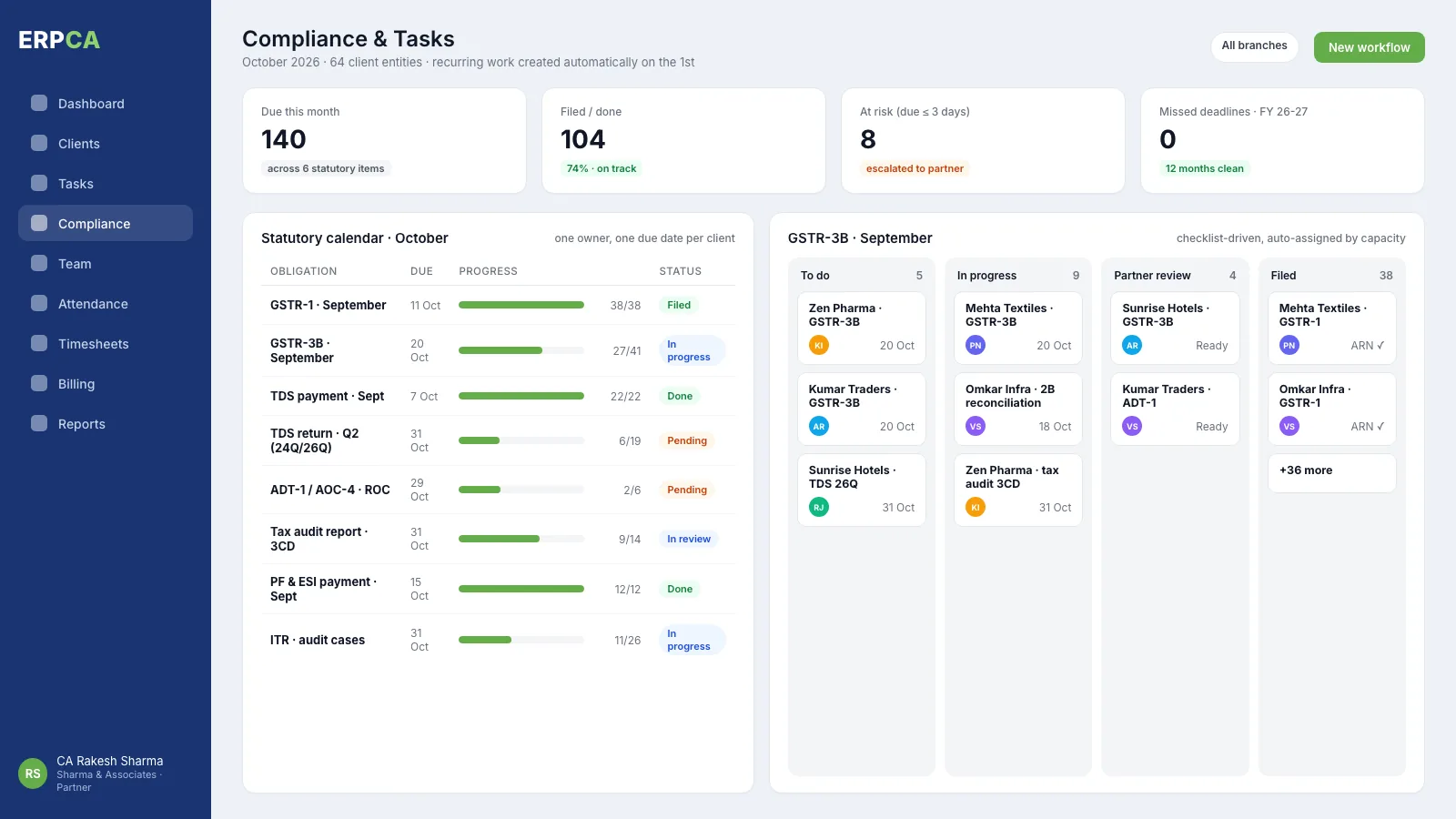
What you would use on ERPCA
Everything above is part of one platform — switch on what you need, add the rest as the firm grows. See plans.

Proof
₹50 a day
GST late fee per return, before interest — the price of one date nobody saw
Case study: Rajan Chakravarthy & Associates
Read how a practice like yours made the change, what it chose to switch on first, and what it got back.
Questions firms like yours ask
How quickly does the calendar go live?
Clients are imported from Excel or Tally and standard recurring work is switched on in the first session — most firms have their full calendar within three days.
What if our due dates differ by client?
Each client's applicable compliances are set once; the system then generates only what applies, on the right periodicity.
Does it track notices and extensions?
Yes. Notices become tasks with their own due dates, and extended dates update the calendar for the clients affected.
More by problem
See it on your own firm's numbers
Thirty minutes, on a call, with your clients and workflows rather than a demo account. Live in about three days if you go ahead.